
Denied SSDI in Tampa? The Fight Isn't Over.
Social Security Disability Attorney Tampa & Hillsborough County
Most initial SSDI applications in Florida are denied — including many that are ultimately approved on appeal. If you've been denied, or if you're preparing to apply and want to get it right the first time, Attorney Anna Katherine Stone has handled Social Security disability cases in Tampa and Hillsborough County for more than 20 years. She appears personally at ALJ hearings, prepares every client for what to expect, and handles both SSDI and workers' compensation — two programs that more injured workers qualify for simultaneously than most people realize.

Filing. Denials. Hearings. We Handle It All.
Social Security Disability Support We Provide in Tampa & Hillsborough County
From first-time applications to federal court appeals, we represent Tampa-area clients at every stage of the SSDI and SSI process. Explore the areas we handle below, or call us directly if you're not sure where your situation fits.

Disability Benefits
Button
Filing for Social Security Benefits
Button
Denied Social Security Disability
Button
Social Security Disability Lawsuit
Button





Disability Benefits
Button
Filing for Social Security Benefits
Button
Denied Social Security Disability
Button
Social Security Disability Lawsuit
ButtonSSDI and SSI: What's the Difference and Which One Applies to You?
The Social Security Administration administers two separate disability programs, and many applicants don't know which one they've applied for — or whether they may qualify for both.
Social Security Disability Insurance (SSDI)
SSDI is based on your work history. To qualify, you must have earned enough work credits through prior employment — generally about 10 years of full-time work, though younger workers may qualify with fewer credits. Benefit amounts are tied to your earnings record. If approved, you also become eligible for Medicare after a 24-month waiting period.
Supplemental Security Income (SSI)
SSI is needs-based, not work-history based. It covers individuals with limited income and resources who are disabled, blind, or over 65. Benefit amounts are set by federal guidelines and are generally lower than SSDI payments. SSI recipients may be eligible for Medicaid immediately upon approval in Florida.
Can You Receive Both?
In some cases, yes. If you meet the medical and work-history requirements for SSDI but your benefit amount is low, you may also qualify for SSI to supplement it. This is called concurrent benefits. We review eligibility for both programs during the initial consultation so nothing is missed.
How the SSA Decides Whether You Qualify: The Five-Step Evaluation
The Social Security Administration uses a standardized five-step process to evaluate every disability claim. Understanding how each step works — and where claims typically fail — is the foundation of effective representation.
Step 1:
Are You Currently Working?
If you are engaged in what the SSA calls "substantial gainful activity" — meaning you are earning above a monthly threshold through work — your claim will be denied at this step. There are exceptions for certain supported work arrangements, but the threshold is strictly applied.
Step 2:
Is Your Condition Severe?
Your medical condition must significantly limit your ability to perform basic work activities — things like standing, walking, lifting, concentrating, or understanding instructions. Conditions that cause only minimal limitations do not meet this threshold. Medical documentation establishing severity is critical at this step.
Step 3:
Does Your Condition Meet or Equal a Listed Impairment?
The SSA maintains a list of conditions — called the "Blue Book" — that are considered severe enough to automatically qualify for benefits if the specific medical criteria are met. If your condition meets or equals a listing, you are approved at this step. Most claims do not meet a listing and proceed to steps four and five.
Step 4:
Can You Still Do Your Past Work?
If your condition doesn't meet a listing, the SSA assesses your residual functional capacity (RFC) — essentially, what you can still do physically and mentally — and determines whether you can return to any work you've done in the past 15 years. If you can, the claim is denied.
Step 5:
Can You Do Any Other Work?
If you cannot return to past work, the SSA considers whether you could adjust to other work that exists in significant numbers in the national economy, taking into account your age, education, and work experience. This is where vocational expert testimony often becomes decisive — and where having an attorney makes a measurable difference.
What SSDI Hearings Look Like for Tampa & Hillsborough County Claimants
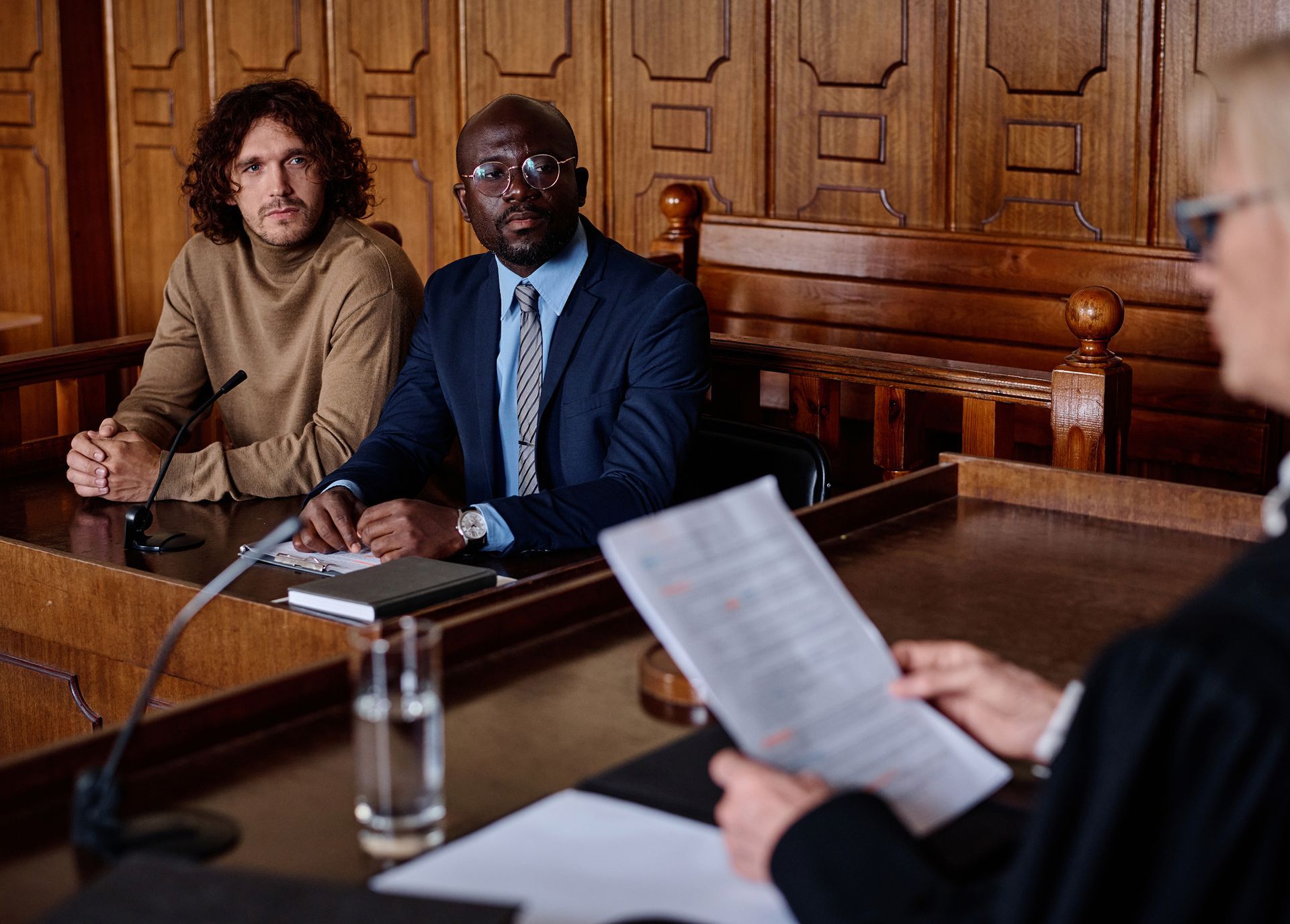
If your initial application and reconsideration request are denied, the next step is requesting a hearing before an Administrative Law Judge (ALJ). For most Tampa and Hillsborough County claimants, this hearing is scheduled through the SSA's Tampa hearing office, located at 3225 S. MacDill Avenue.
ALJ hearings in the Tampa region typically involve a waiting period of 12 to 18 months from the time the hearing is requested. The hearing itself is less formal than a courtroom proceeding but carries significant weight — the ALJ reviews your medical record, hears testimony from you and sometimes from a vocational expert, and issues a written decision.
Represented claimants have significantly higher approval rates at the ALJ stage than unrepresented ones. We prepare every Tampa-area client personally for their hearing: reviewing the medical record for gaps, preparing testimony, and cross-examining vocational experts when their testimony works against the claim.
If the ALJ
denies the claim, further appeals to the Appeals Council and federal district court are available. We handle every stage.
Conditions That Commonly Qualify for SSDI in Florida
The SSA evaluates the functional impact of your condition, not just the diagnosis. That said, certain categories of conditions appear frequently in approved Tampa-area SSDI claims:
- Musculoskeletal conditions: Back injuries, degenerative disc disease, joint disorders, and chronic pain conditions affecting the ability to sit, stand, walk, or lift for sustained periods
- Mental health conditions: Depression, anxiety disorders, PTSD, bipolar disorder, and schizophrenia — when documented to the degree that they prevent consistent, reliable work performance
- Neurological conditions: Multiple sclerosis, Parkinson's disease, epilepsy, traumatic brain injury, and stroke-related impairments
- Cardiovascular conditions: Coronary artery disease, heart failure, and chronic heart conditions that limit exertion
- Respiratory conditions: COPD, asthma, and pulmonary conditions affecting the ability to perform work at any exertional level
- Cancer: Many cancers qualify automatically under the SSA's Compassionate Allowances program, which fast-tracks certain diagnoses
The strength of the medical record is the most important factor in any SSDI claim. We review records before filing and identify gaps that need to be addressed before the application goes in.
Hurt at Work and Can't Return? You May Qualify for Both Workers' Comp and SSDI.
Many injured workers don't realize that workers' compensation and Social Security disability benefits are not mutually exclusive. If your work injury has left you unable to return to work on a long-term or permanent basis, you may qualify for SSDI in addition to your workers' comp benefits.
There are coordination rules — receiving workers' comp benefits can reduce your SSDI payment under what the SSA calls the "offset" provision — but the offset doesn't eliminate SSDI eligibility, and in many cases the combined benefit still exceeds what either program pays alone. The key is making sure both claims are structured correctly from the start.
Anna Katherine Stone handles both workers' compensation and Social Security disability at this firm, which means she can evaluate your eligibility for each and coordinate both claims without you having to manage two separate attorneys.
Testimonials
Anna Katherine Stone: Tampa SSDI Attorney With 20+ Years of Disability Case Experience

Slide title
"Katherine Stone is easily one of the best attorneys in the area. Her vast knowledge, communication & resources are unmatched. HIGHLY recommend!!"
-Sara Poppleton
Button-
Slide title
"Katherine works hard for her clients and helps her clients understand the process and explains the law in a way the client can understand. Her staff is very helpful too.."
-Robert Stucky
Button -
Slide title
"Katherine helped me when I was feeling hopeless with my disability case. I could never thank her enough for her representation."
-Deborah Wilson
Button -
Slide title
"Thank you Ms. Stone. She is a wonderful lawyer who always keeps you inform. She represented me twice and won twice. If you are looking for a good lawyer make sure you call her."
-John Velazquez
Button

Tampa SSDI Questions, Answered
How do I find a Social Security disability attorney in Tampa?
Look for an attorney who focuses on SSDI and handles ALJ hearings personally — not a high-volume national firm that assigns cases to non-attorney representatives. Anna Katherine Stone has handled disability claims in Tampa and Hillsborough County for more than 20 years and personally prepares and appears at every hearing. Consultations are free.
What does an SSDI lawyer do in Florida?
An SSDI attorney helps you build the strongest possible medical record, identifies gaps in documentation before filing, handles all SSA correspondence and deadlines, prepares you for your ALJ hearing, cross-examines vocational experts when their testimony is working against you, and pursues further appeals if the ALJ denies the claim. Representation significantly improves approval rates at the hearing stage.
How long does a disability appeal take in Hillsborough County?
The wait for an ALJ hearing in the Tampa region is typically 12 to 18 months from the date the hearing is requested. The reconsideration stage before that adds several additional months. The full process from initial application to ALJ decision commonly takes two years or more. Having an attorney ensures nothing falls through the cracks during that wait.
Can I get SSDI if I already receive workers' comp?
Yes, in many cases. Workers' comp and SSDI can be received simultaneously, though the SSA applies an offset that may reduce your SSDI payment if combined benefits exceed a certain threshold of your pre-disability earnings. Proper coordination of both claims from the start minimizes the impact of the offset. We handle both practice areas and can evaluate your eligibility for each.
What are the most common reasons SSDI claims are denied in Florida?
The most common reasons SSDI claims are denied include insufficient medical documentation, earnings above the substantial gainful activity threshold, failure to follow prescribed treatment without a documented reason, and conditions the SSA determines do not prevent all work. Many denials come down to gaps in the medical record that a represented claimant would have addressed before filing.
Is there a deadline to appeal a denied SSDI claim?
Yes. You have 60 days from the date of the denial notice to request the next level of review — either reconsideration or an ALJ hearing, depending on where you are in the process. Missing that deadline generally requires starting over from the beginning and can result in losing disability backpay. Contact us as soon as you receive a denial.
Reviewed by Attorney Anna Katherine Stone, 20+ years of Florida legal experience.